November 19, 2008

Why Blogger Is No Good For Business Blogging

Posted by: Krishna De of BizGrowthNews on 10/12/08

I was recently running a workshop about Word of Mouse Marketing using social media from blogging to microblogging, podcasting to video casting and it was heartening to see that about 8 per cent of the 140 attendees were blogging about their business.

However I then became disheartened as most of those blogs had been developed on a platform such as Blogger or Wordpress.com.

If anyone tells you that business blogging is not a significant investment of your time, they clearly are not a business blogger developing online content and implementing a link building strategy to bring traffic to their business blog.

Don’t get me wrong, blogging is a terrific online marketing strategy if executed effectively. I could think of no other way that I would have attracted as many leads to my business so cost effectively without a business blog.

However if you are going to invest in business blogging, be good to yourself… don’t have all those wonderful incoming links to your great content go to a blog that is not hosted by you.

You might think this is something that only happens for small businesses - it’s not!

A colleague of mine on a social media working group is employed as an online expert for an online insurance company, and their external consultant had advised them to develop a business blog using Wordpress.com.

I’ve even seen Marketing Directors of major companies who should know more about branding than most use a blog that is detracting from their personal brand online as they are using Blogger.

Online personal branding experts even look to encourage people to use Typepad.com as a blog platform - whilst it’s a great blogging platform that I use and recommend, if you also have a website, a Typepad blog is not going to help you with your link building and search engine optimisation strategy which is becoming even more critical as few people now move beyond page 1 of Google when searching and researching online. What do they do if they can not find what they are looking for online on the first page of their search? They change the words they are using to search with of course.

Investing a little in implementing a business blog that is hosted on your website not only makes you look like you take business blogging seriously as part of your online marketing strategy, it also means that every link to your great content is a link to your website.

That way you will be sure to benefit even more from your online content strategy buildng links to your business blog.

How Interactive is Your Blog? Measure It!

One of the coolest things about business blogging is the social interaction and community that is built when readers leave meaningful comments. Like a good story, a post elicits a response from the reader. As your community develops, the value of your brand increases. But this warm and fuzzy feeling that people get about your brand as they interact with you on your blog can be hard to measure and quantify. That’s where blog interaction metrics come in.

Building a blog to one or more interaction metrics can help you focus on what’s important - brand engagement.

Do you measure a successful post by the number of readers, bookmarks added to del.ic.ious, diggs, comments, number or quality of backlinks, or a combination of all the above? Some metrics have a place in your blog marketing scorecard, like number of comments. And some do not, like number of trackbacks (unless you like counting spammers — and that you could do all day!). Because the last thing you need is just more data for the sake of data.

Avinash Kaushik came up with some really nifty blog success metrics that really resonate with me. I bet they’ll resonate with you too. They are:

  • Raw author contribution (posts per month and words per post)
  • Audience growth (onsite & offsite, visitors and unique visitors)
  • “Conversion” rate (comments per post)
  • Citations (blog inlinks, Technorati rank)
  • Ripple Index (# of unique blogs linking to your blog)
  • Cost (time, hardware/software technology, opportunity cost
  • Benefit / ROI (comparative vs. direct vs. “non-traditional” vs. unquantifiable)

As you start measuring the above and then gauging the success of what you’re doing on your blog based on these metrics, you can tie your activities back to something more meaningful than just the “hits” you’re generating.

If you want to learn more about metrics, I encourage you to watch the archived recording of a “Website Metrics and ROI” webinar that Avinash and I presented last year. No registration required. Just click and watch (or download). It’s 100 minutes of the two of us talking about our favorite metrics — not just for blogging, but also email marketing, web marketing, search marketing, and more. And if you just want to scan over our Powerpoint slides before you invest 100 minutes of your time (and I don’t blame you — time is precious!), here’s the PPT file. Enjoy!
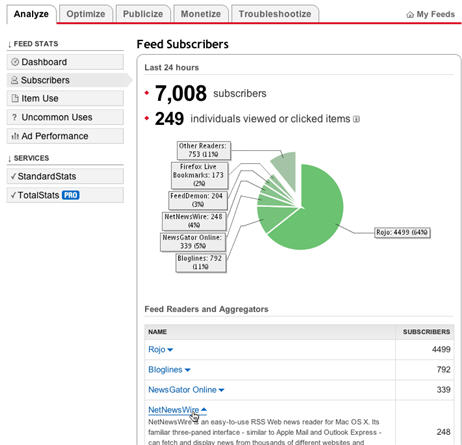
FeedBurner Blog Metrics

What blog metrics do you value most? How do your readers interact with you? Do you have any particular reporting tools you recommend? Your interactivity is welcome and invited.

 

Syndicate:

RSS RSS Feed


Posts via e-mail

Enter your email address:

Delivered by FeedBurner

Recent Posts:

Archives:

Buzz Cloud:

Recent Readers:

Tag Cloud:

Categories: